The Generous Narrative: How Our Stories Shape Our World
We are, at our core, the weavers of meaning. Whatever the storm or the stillness around us, we hold absolute dominion over the architecture of the stories we tell ourselves. It is a quiet, radical power, completely our own.
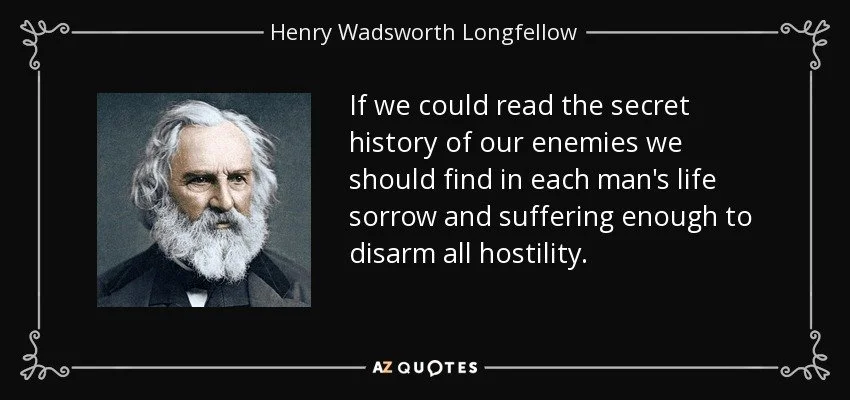
Yet, we so easily fall into a tragic asymmetry. As the thinkers John Bennett and Stephen Covey have observed, we measure our own souls by the invisible grace of our intentions, but we measure our fellow humans by the heavy gravity of their words or actions. We see our own hidden light; while we focus on their clumsy footsteps. In this gap, misunderstanding and resentment find their cozy nest.
But what if we reached for a bridge instead of a wall?
The Architecture of Grace
The practice of Nonviolent Communication (NVC) invites us to step into a softer light, defaulting to the most generous narrative possible to explain the behavior of another. This is not an act of resignation; it is the moment we reclaim our power. We consciously choose a story that preserves their humanity, honors their unseen intentions, and keeps the embers of care alive.
Without erasing the pain or impact of what has occurred, we gently step away from the bitter cycle of blame and shame. We choose to trust that beneath every awkward, sharp, or wounding word or gesture, there is a human being simply trying to touch a beautiful, universal need.
We may not applaud their strategies, but we can recognize the desperate, broken poetry of their longing to be whole, trying the only way they know how. When we rewrite our internal dialogue, the armor drops. We soften into understanding.
Consider the small, daily friction of a shared home. Th dishwasher sits full—the morning agreement to put away the clear dishes—broken by our children. The mind, left untamed, instantly paints a dark canvas: they are lazy, entitled, indifferent. These spoilt gen z’s and alpha’s!
Or, we can breathe into NVC’s quiet sanctuary of needs-based innocence—the belief that every action is a prayer to meet a need. In this generous space, we imagine their weariness and their need for rest, a weight we are all too familiar with. We see their hunger for autonomy, or perhaps just a simple need for clarity.
The magic lies not in whether our guess is factually accurate, but in how the guess unties the knots in our own hearts, leaning us toward tenderness. Our stories, after all, are the architects of our reality; they become self-fulfilling prophecies.
Escaping the Mistrust Groove
When we adopt this creator paradigm, we cast a silent, compelling invitation for others to step into collaboration with us. It alters the very air in the room, creating a palpable energetic field even before a word is spoken.
NVC Certified Trainer Miki Kashtan warns us of the alternative—the "mistrust groove". When our needs are unmet, we swiftly build negative narratives that deepen the divide, fraying the delicate web of relationships.
Instead, Kashtan invites us to land on the most generous narrative possible. When we do, something physical alters within us:
"At the body level, I become softer, more relaxed, less protected...the move towards dialogue is the move of unprotecting, relaxing. Here I am, ready to receive you... It reduces tension, which the other person will pick up and it’ll be less scary for them to then take a step."
The Utopian Question: Is It Naïveté?
Is it foolish to assume innocence when a child sneaks and lies, or when the world inflicts harm?
The answer lies in separating the strategy from the need. When a child sneaks five hours of video games, breaking a sacred agreement, can we look past the screen and see the innocent, aching thirst for community and connection with peers, the pursuit of competence and mastery, or the desperate search for meaning and purpose during the isolated, quiet drone of summer break? To humanize them is to recognize ourselves: I, too, carry these same longings. Understanding ≄ condoning strategies, or giving up on our needs as parents, such as for contribution to the child’s health.
Even when confronting the most destructive strategies on the world stage, holding a generous narrative about human needs does not condone the harm—it enhances our power to heal it. When we approach others cloaked in negative narratives, their nervous systems detect the unspoken threat and instantly lock into defense.
A Chosen Story
By definition, we cannot prove an assumption. We cannot scientifically prove the NVC assumption that every human action is an attempt to meet a universal need. It, too, is a story.
But it is a story worth choosing. We may not know it to be an absolute truth, but we can know the beauty of what happens to our lives when we live inside it. We become less harsh with ourselves, for we assume that we, too, are doing the best we can, in each moment, to meet our needs, and we draw closer to the human family.
The assumptions we cradle in our minds shape the very texture of the world we build. And from the quiet moment we realize this power belongs to us, the world is never the same.
So, the next time someone does or says something you do not enjoy, consider coming up with the most generous narrative to explain their choices, and see the magic unfold!