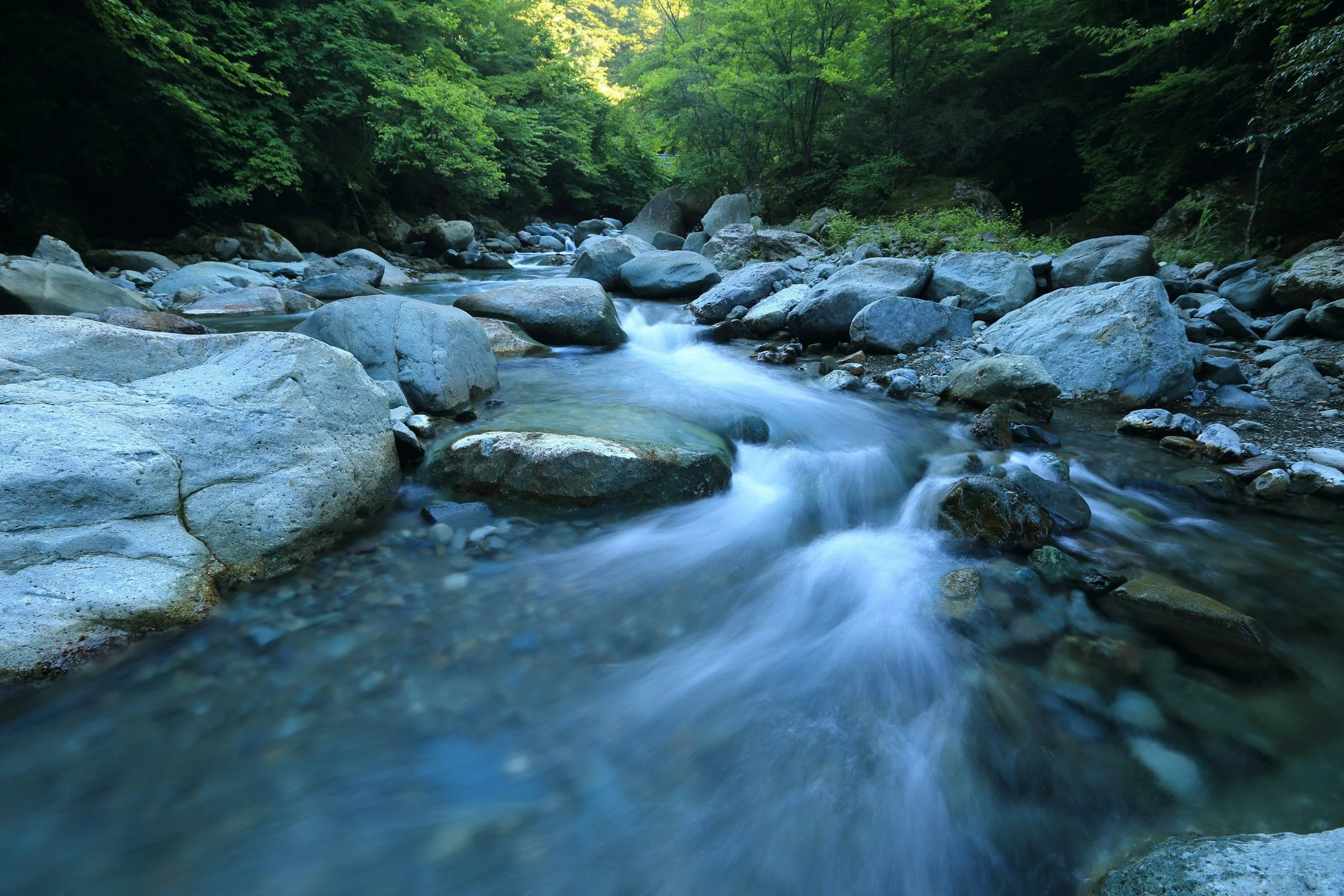
“Water is the softest thing, yet it can penetrate mountains and earth. This shows clearly the principle of softness overcoming hardness.” ~ Lao-tzu
Control is the unrelenting, persistent effort to modify, coax, or cajole the world into meeting our needs. Our human experience is so fragile and vulnerable, and to try to control what happens outside is one way to not feel so vulnerable inside. If I am unhappy because my needs are not met, it must be someone or something’s fault, and therefore, I make efforts to fix that external stimulus. It is an unnatural, habitual survival mechanism, and hence, very draining! Its corollaries, resisting and resenting, keep us miserable. When our emotional world is alive, we can feel overwhelmed, panicky, and experience an urgent push to bring relief to the fire within by controlling something or someone. In the shadowed soil of control, the seeds of suffering are sown, and the dark creeper which stifles our happiness begins to grow.
The Vedas explain that this material world is not our real home. We are like a fish out of water. The fear of illness or death for ourselves or our loved ones haunts us. Somehow, life doesn’t always progress according to our plans. This vulnerability of being human can feel like walking on egg shells or a tight rope. Have you noticed that somehow we are paired with the very people who push our most sensitive buttons? Our spouses don’t comply with our oh-so-reasonable requests (demands?) and our roommates' idiosyncrasies drive us to the wall!
His Grace Bhurijana Prabhu writes in his book, Japa, “That we have no control over our world, of course, causes great fear and frustration for us. Yet this is how Krsna has constructed the universe. The universe simply refuses to cooperate with our false ego; it refuses to align itself with our vision of ourselves as the central figure in the world or with our attempt to organize everything and everyone around our conception of happiness. The universe is designed to make us miserable so that we learn.”
Because the world is not designed for our control, trying to control reinforces or perpetuates our vulnerability and adds more vulnerability. The cycle of control is an endless loop of clinching the noose tighter and tighter.
Fear makes us fixated and perpetuates what we fear. We respond more to our anxiety, than to the situation itself. And when we come from that energy, the world responds back in a way that mirrors or reflects what we are afraid of. We become the architects of our own misery. When we are fearful, we get fixated on “it has to be a certain way”.
Lord Krishna explains this cycle in the Bhagavad Gita 2.62-63,
dhyāyato viṣayān puḿsaḥ
sańgas teṣūpajāyate
sańgāt sañjāyate kāmaḥ
kāmāt krodho 'bhijāyate
krodhād bhavati sammohaḥ
sammohāt smṛti-vibhramaḥ
smṛti-bhraḿśād buddhi-nāśo
buddhi-nāśāt praṇaśyati
While contemplating the objects of the senses, a person develops attachment for them, and from such attachment lust develops, and from lust anger arises. From anger, complete delusion arises, and from delusion bewilderment of memory. When memory is bewildered, intelligence is lost, and when intelligence is lost one falls down again into the material pool.
The Antidote
Instead of tightening into control, the Vedas are inviting us into a realm of flow, surrender, and trust.
The Divine’s arrangements are not punitive, they are acts of deep love. It is our isvara bhava, or tendency to control, that brought us to this material world to begin with. So, in order to get back to a more natural state of being, one where we experience flow, rather than constriction, giving up our controllership mentality is key. When we shift to understanding that if someone pushes my button, it is I that owns the button, we see our relationships as our learning lab, rather than expending energy on trying to modify the personalities or behaviors of others.
Consider a radical alternative to control - one of acknowledging and embracing our vulnerability, containing it, communicating it, connecting with our feelings and needs, and making requests. Instead of protecting our vulnerability and building shields around it, we undefend it. This is an empowering path, which depends on finding Real Spiritual Shelter. We begin to expand our capacity to contain our unmet needs, without experiencing an uncontrollable urge to lash out or change the world. We move from rigidity to flexibility, accepting that divine plans are constantly evolving. The real test of nonviolence is the capacity and willingness to live in peace with unmet needs.
Flow vs Giving Up
So shall I let go and drop all my plans and ambitions? Shall I give up my freedom?
No, the shift is only in the inner orientation of the heart. Flow is a spacious and tender, rather than a constricted or resigned approach to life. Coming from a grounded energy, we don’t let go of our needs, but meet life on life’s terms. Flow is understanding that change does not come by coercion and tightening.
Miki Kashtan writes, “Why was I advocating for accepting what is? Purely and simply because anything else leaves us in a fight relationship with life… accepting what is really and truly doesn’t mean that I have to like it, or to pretend that I am OK with something that isn’t. It only means that I stop long enough to realize that whether or not I like this situation, it is happening, and there is no point in doing anything other than sit still and recognize that it’s happening. No amount of resentment or unconscious magical thinking makes it not be there when it’s there.”
And further, the same author writes, “surrender is the release of control whereas obedience is the giving up of freedom. If this intuitive understanding is even remotely accurate, then the gap amounts to the difference between following life based on trust and following external authority based on fear… It took me decades before I could ever experience surrender as, indeed, distinct from giving up my freedom.”
Who is a better master of flow than water? So let us look at some analogies of water from wisdom texts.
Ancient Chinese philosopher, Lao-tzu, said “Water is the softest thing, yet it can penetrate mountains and earth. This shows clearly the principle of softness overcoming hardness.”
His Holiness S. B. Kesava Swami writes, “the nature of water is to flow; its frozen state a distortion and suspension of its essence. The Bhāgavata depicts the saintly souls as flowing rivers. They don’t collide with the world, but gracefully navigate past every obstacle with quiet determination. As they flow, they generate a resonant, pleasing sound—one that pacifies the hearts of those they encounter. These saintly rivers leave everything they touch better than they found it—rocks are smoothed, the environment cleansed. The river effortlessly carries others forward by its own momentum. They never slow down, but speed everyone else up. The saints take everyone on the adventure with them.
The prayer of the saintly woman, Kunti reminds us of the power of flow:
tvayi me ’nanya-viṣayā
matir madhu-pate ’sakṛt
ratim udvahatād addhā
gaṅgevaugham udanvati
O Lord of Madhu, as the Ganges forever flows to the sea without hindrance, let my attraction be constantly drawn unto You without being diverted to anyone else.
May I learn to flow! Every moment is an opportunity to let go of our isvara bhava and choose to relax into flow. And then, I trust, the river of my mind will flow with more ease to the lotus feet of the Divine!